The Isle of Skye has a habit of making people overreach. You step off the bus in Portree, catch a break in the cloud over the Cuillin ridge, and suddenly every walk you'd planned feels too small. Resist that for a day or two. Skye's lower paths are genuinely excellent, and they'll teach you how the island's weather behaves before you commit to anything exposed.
What follows is what a first visit actually needs: which trails to start with, how to dress for weather that changes by the hour, and the transport and accommodation details that catch people out.
Start with these trails
Skye's beginner-friendly walks share a few traits: well-trodden paths, moderate distance, and a clear turning point if the cloud comes down. Distances are round-trip.
- Old Man of Storr — about 3.5km with 300m of ascent. The path is good but steep, and loose underfoot near the top. Allow two hours.
- Fairy Pools, Glen Brittle — a gentle valley walk of 2.5–4km depending on how far up the burn you go, with rocky steps and stream crossings.
- Claigan Coral Beach — 4km on a clear track to a white shell beach. Flat, family-friendly and usually quieter than the headline sights.
- Neist Point — 2km to the lighthouse, with a steep flight of steps. Superb at sunset if the wind isn't howling.
- Talisker Bay — 4km through farmland to a black-sand beach with a waterfall at one end.
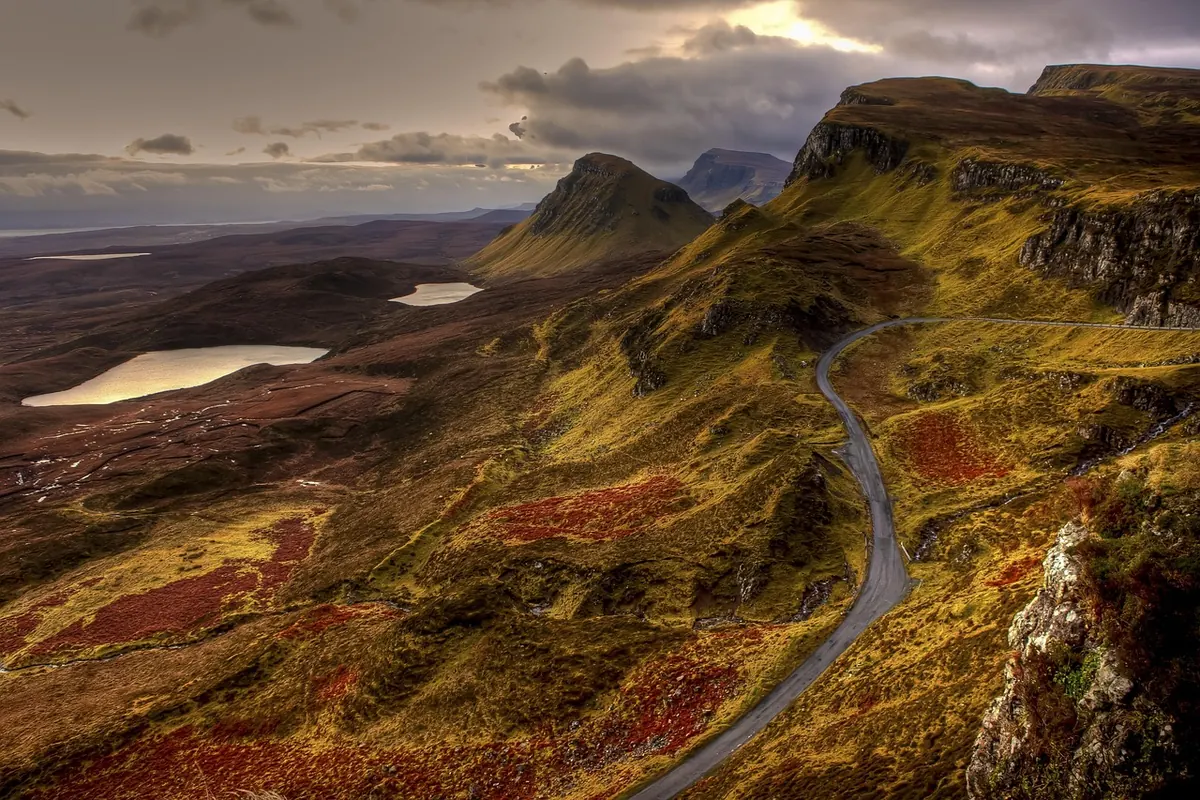
- The Quiraing — walk the ridge for a couple of kilometres from the car park rather than committing to the full circuit, which is longer, boggier and easily lost in mist.
Leave the Cuillin for another trip. Even the friendlier summits involve scrambling, route-finding and real exposure, and they deserve a day when you're not also working out how Scottish weather works.
Weather: expect four seasons before lunch
Skye sits in the path of Atlantic fronts, which means rain arrives sideways, sunshine lasts twenty minutes, and wind is the factor that most often turns a pleasant walk into a hard one. Check the forecast the night before and again in the morning; the Mountain Weather Information Service and the Met Office both cover the island well.
Pack as though it will rain, because it probably will:
- Waterproof jacket and waterproof trousers. A jacket alone leaves you soaked from the knee down.
- A warm mid-layer plus a spare, and a hat and thin gloves.
- Boots with real grip. Trainer soles slide on wet gabbro and grass.
- Spare socks in a dry bag, and a waterproof case for your phone and map.
- More food and water than you think you need.
If the cloud drops below 300m, change plan. Coastal walks — Coral Beach, Neist Point, the shoreline at Elgol — stay enjoyable in conditions that make ridge walks pointless. Save the big views for the clear day.
Getting there
Most visitors arrive by car over the Skye Bridge from Kyle of Lochalsh, or by ferry from Mallaig to Armadale. Trains run to Kyle of Lochalsh from Inverness, with buses onwards to Portree; Citylink coaches connect Glasgow and Inverness, and local Stagecoach services fill the gaps. Without a car you can still see plenty by basing yourself in Portree and mixing buses with the odd guided tour, but you'll be tied to timetables and the last service of the day.
With a car, single-track roads are the main thing to learn. Pull into passing places on your left, or stop opposite one on your right and let oncoming traffic through. Never park in a passing place, and never stop in the middle of the road for photographs — there are lay-bys for that. Fuel up at Broadford or Portree; there are long stretches with no petrol station.
Where to base yourself
Portree is the obvious first base, with the widest choice of accommodation, restaurants and bus links. Broadford suits anyone arriving from the bridge and heading for the Cuillin or Fairy Pools. Uig is handy for the Outer Hebrides ferries, while Sligachan, Carbost and Dunvegan work well for a quieter stay.
Book early for May to September, ideally months ahead — beds fill fast and popular campsites turn people away. Hostels, bunkhouses, B&Bs and self-catering cottages all exist in reasonable numbers, and a car widens your options considerably. Lightweight wild camping is permitted in Scotland under access rights, but keep groups small, camp away from buildings and roads, and check for any local seasonal restrictions before you pitch.
Timing, crowds and midges
Late May, June and September give the best balance of daylight, weather and breathing space. July and August are busiest, and the car parks at the Old Man of Storr, Fairy Pools and Quiraing fill by mid-morning. Arrive before 9am or come after 5pm and you'll have a very different experience.
Midges are a genuine factor from late May to September, worst on still, damp evenings near water and woodland. A head net, a decent repellent and long sleeves make the difference between an evening outside and an evening in. They're far less trouble on breezy coastal headlands.
Staying safe and leaving no trace
Tell someone your route and expected return time, and don't rely on your phone — signal is patchy in the glens and absent in many of them. Carry a paper map and know how to read it. If you're new to hill walking, a navigation course or a guided day pays for itself quickly in confidence.
Close gates behind you, keep dogs on leads around sheep and cattle, take all litter home, and don't light fires. This landscape is farmed and lived in, not a theme park, and treating it that way keeps access open for everyone.
Making it work: a simple first visit
Three nights is enough for a taster. Use day one for the Old Man of Storr and a stop at Kilt Rock, day two for the Fairy Pools and Talisker Bay, and day three for the Quiraing or a slow loop around the Trotternish peninsula. Build in a wet-weather day for a distillery, a museum or simply a long lunch in Portree — you'll need it, and Skye is a lovely place to sit still in when the rain comes through.
Photo: FrankyFromGermany / Pixabay