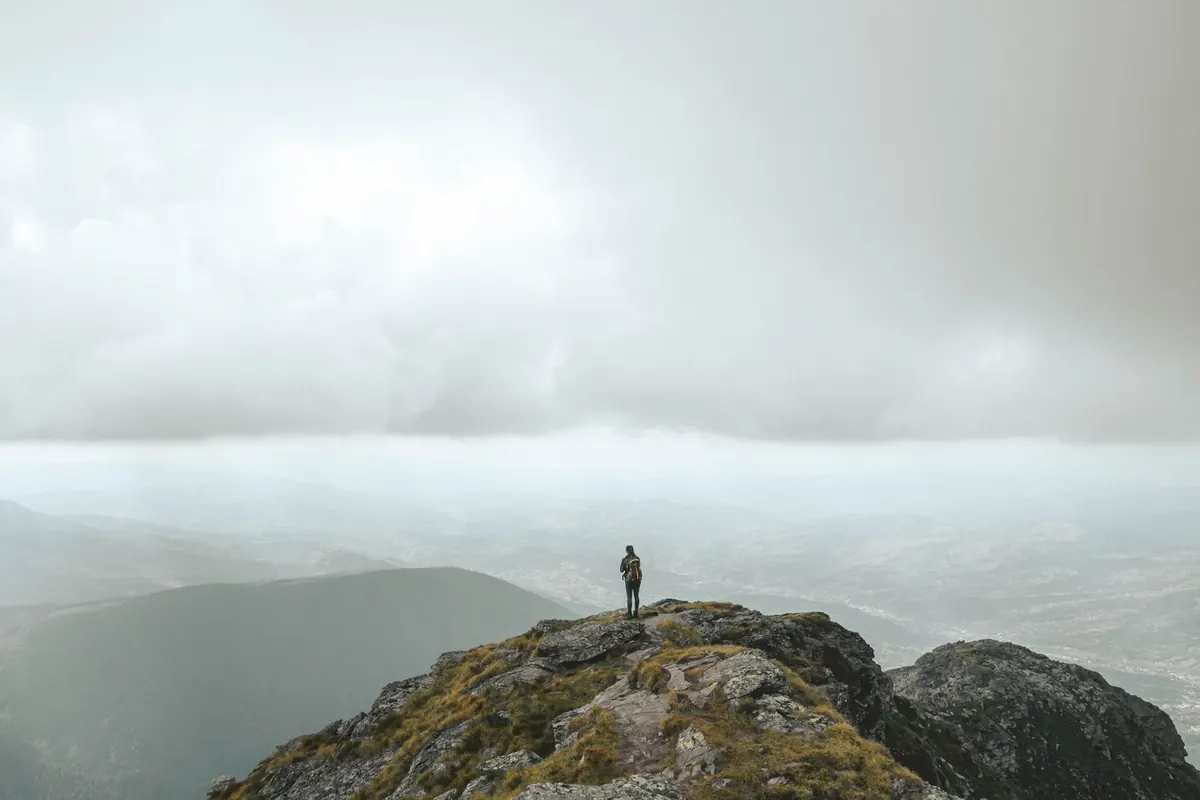
The path under your boots feels wrong. The bend you expected hasn't appeared, the ground is rougher than the map suggested, and the light is thinning. It happens to experienced walkers, not just beginners. What matters is what you do next. Panic and stubborn forward motion turn a wrong turn into a serious incident. A calm sequence—stop, think, shelter, signal—keeps you safe and makes you easier to find. I have seen a confident hiker ignore a missed turn on a well-marked trail and end up spending a cold night under a rock overhang, only a mile from a road. The rescue team found him quickly because he finally stopped and stayed put.
Stop, Breathe, and Stay Put
As soon as you are unsure, stop. Sit on your pack, have a drink, and eat something. Give your brain five minutes without the rhythm of walking. The urge to push on and "just check around the next corner" is strong, but it often takes you further from the trail and from where a search team would start looking. A group I once met on a misty ridge in Snowdonia ignored this advice and kept walking for another hour, convinced the car park was just ahead. It wasn't. They ended up three valleys over, cold and frightened, when a simple stop and map check would have put them back on track in ten minutes.
Staying put is usually the safest choice. You are a fixed point, not a moving target. If you are certain you passed a clear junction minutes ago, and you can see your own footprints, a short retrace is reasonable. Do not wander off in a new direction hoping to stumble on the path. If you are in a group, keep everyone together and count heads. Use whistles—three short blasts is a common signal for "I need help" in many mountain rescue protocols. A plastic whistle weighs nothing and works when your voice is gone.
Remember the acronym S.T.O.P.: Stop, Think, Observe, Plan. It takes sixty seconds and can save your life.
Get a Fix on Where You Are
Work out your best guess at a location. Take out your map and compass, or your phone if it has battery and signal. Orient the map to the ground. Look for features that are hard to mistake: a stream junction, a ridge line, a trig point, a wall corner, a distinctive crag. Compare the shape of the land with the contours. If you can see two or three known landmarks, you can triangulate your position by taking bearings and drawing lines on the map. Even a rough idea—"I'm on the north side of the ridge, above the tree line"—narrows the search area dramatically.
If your phone works, take a grid reference or a what3words address. Write it down. Note your altitude if you have a watch or app. If you have no signal, keep the phone in flight mode to save power, or turn it off until needed. A paper map and compass do not run out of battery. In fact, many experienced hikers carry a small laminated card with their local emergency numbers, because panic can erase phone numbers from memory.
What to record
- The time you realised you were lost.
- Your best grid reference or location description.
- Landmarks you can see and their direction.
- Weather, visibility and how many people are with you.
- Any injuries or clothing that affects your safety.
- Your planned route and the last point you are sure you were on it.
- Supplies: water, food, headlamp battery, shelter.
Shelter and Stay Warm
Exposure is the real threat when you are stuck. Stop moving long enough to get cold and the situation changes quickly. Put on every dry layer: fleece, insulated jacket, waterproof shell, hat, gloves. Get out of the wind. Sit on your pack, a foam mat or dry bracken rather than cold ground. If rain is heavy, rig your emergency shelter—a bothy bag or tarp can turn a miserable wait into a survivable one. Hypothermia creeps in when you are wet and static; watch for the "umbles": stumbles, mumbles, fumbles, and grumbles. If someone in your group starts slurring or acting oddly, treat it as a medical emergency and get them insulated and fed fast.
Eat and drink. Your body needs fuel to stay warm. Keep your phone and batteries inside your jacket or sleeping bag to keep them warm; cold drains batteries fast. A small chocolate bar or handful of nuts every hour keeps your internal furnace going. If you have a stove, a hot drink is a morale booster, but do not waste fuel if you are unsure how long you'll be waiting. Melted snow takes a lot of fuel; a simple flask of hot tea from home is better.
Signal for Help Effectively
Once you are safe and warm, focus on being found. Sound carries farther than you think, especially over still air or water. Use your whistle: six short blasts in a minute is the international distress signal. Repeat every minute. A torch flashed six times in a row, then a pause, is the same signal. If you have a mirror or shiny phone screen, aim it at aircraft or distant lights. Bright clothing laid out on snow or a clearing can be seen from the air. If you hear a helicopter, do not run; stay put and wave both arms in a "Y" shape—the universal signal for "I need help."
Three of anything—three whistle blasts, three flashes, three shouts—is a distress signal. Reply with two of anything to say "I hear you."
If you have a personal locator beacon (PLB) or satellite messenger, activate it. But remember: rescue can take hours. Your job is to survive comfortably until they arrive. Conserve phone battery by texting rather than calling if you have a weak signal, and put the phone in airplane mode between check-ins.
Make a Plan Before You Go
Most lost-hiker incidents are prevented before the hike starts. Leave a detailed itinerary with a responsible person: your route, start time, expected finish time, car location, and what to do if you are overdue. Agree on a check-in time—say, 8 p.m.—and tell them to call mountain rescue if they haven't heard from you by then. Carry the ten essentials: navigation, headlamp, sun protection, first aid, knife, fire, shelter, extra food, extra water, and extra clothes. A small emergency bivy sack weighs less than a can of soda and can save your life.
If you are hiking alone, consider a satellite messenger. They are no longer expensive, and they turn "I'm lost" into "I'm at these coordinates, please send help." If you are in a group, designate a leader and a sweep. Count heads at every junction. Teach everyone the S.T.O.P. acronym before you leave the trailhead.
If You Must Move: Moving Safely
Sometimes staying put is not an option: a rising river, a forest fire, or a medical emergency. If you must move, leave markers. Tie a bright bandana to a branch, stack three rocks, or scratch arrows in the dirt. Move downhill if you are genuinely lost in a valley and can hear a road, but be careful—cliffs and waterfalls are common. Follow water downstream only if the terrain is gentle and you can see a long way. Otherwise, stay on ridges where you are more visible. Stop frequently, look back, and memorize the view for your return. Most importantly, keep your group together. A separated group doubles the search area.
After the Incident: Learn and Share
When you are safe, write down what happened while it is fresh. What went wrong? Was the map outdated? Did you miss a turn because you were chatting? Did you ignore a nagging feeling? Share the story with your hiking friends. Not to shame anyone, but because stories are how we learn. The next time you feel that wrongness under your boots, you will remember to stop, breathe, and stay put. And that is exactly what keeps a wrong turn from becoming a tragedy.
Photo: Vlad Bagacian / Pexels