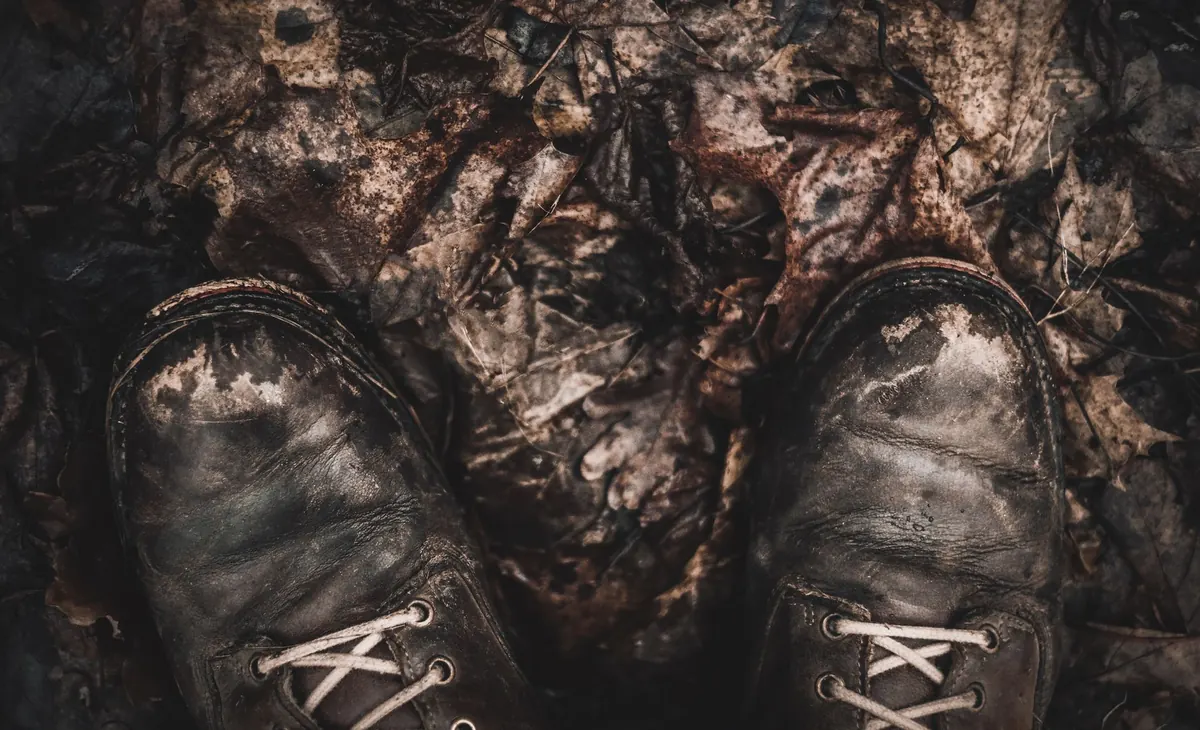
The photograph of a path on the edge of Kinder Scout can look almost gentle. In February, the same path is a mile of black peat, standing water and greasy gritstone, and what you have on your feet decides whether that mile is an adventure or a trudge.
Footwear is the bit of kit people agonise over most, and the arguments in outdoor shops get surprisingly heated. The truth is less dramatic than either camp admits: boots and trail shoes are both good, and the right choice depends on the ground under you, the forecast above you, and how many days you plan to be out.
The short answer
Most British walking sits somewhere in the middle, but the two ends of the spectrum are easy to define.
- Trail shoes: lowland paths, chalk downland, forest tracks, coastal walks, summer hill days, light packs, and long days where you want to move quickly.
- Boots: peat bogs, tussocky moorland, wet grass, loose scree, Scottish glens, winter hill days, and multi-day routes with a loaded pack.
- In between: a mid-height boot or a supportive trail shoe with a rock plate covers a great deal of ordinary British walking, and it is where many people end up after buying the wrong thing twice.
Where boots still earn their keep
A high collar is often sold as ankle protection, and that claim deserves a sceptical look. A collar cannot stop your ankle rolling if it wants to, and plenty of experienced hill walkers cover rough ground in low shoes without trouble. What boots undeniably do is cover the ankle joint: no heather stems whipping at bare skin, no grit inside the shoe, fewer knocks on the ankle bone when you cross a boulder field, and something solid for a gaiter to fasten around.
The stiffer sole matters just as much. On scree, on frozen ground, on any slope where you are edging on small footholds, a stiffer platform spreads the load and gives your feet a rest. That is why a long day in the Cairngorms with a twelve-kilo pack feels very different in boots than in a soft shoe.
Pack weight and the long day
There is an old rule of thumb in walking: weight on your feet costs you more than weight on your back. It is a useful reminder, but it comes with a condition — the sole underneath has to be up to the ground you are standing on. Save 400g and spend the day slipping sideways on wet rock, and your feet will finish more tired, not less.
Where trail shoes win
Trail shoes are lighter, more breathable and far quicker to dry. On a warm day on the South Downs or a forest track in the Chilterns, a boot feels like overkill by the second mile. Sweaty feet soften, and softened skin blisters; a shoe that lets heat and moisture out is doing more for your comfort than any amount of padding.
They also let you feel the ground, which is a genuine skill on rocky paths. Modern rubber compounds grip dry rock and roots extremely well, often better than a stiff boot sole. If you pack light, walk on established paths and prefer a natural stride, shoes make the day easier. They are usually cheaper too, and there is less material to clog with mud.
Water, mud and drying times
This is where most online arguments go wrong, because waterproof and non-waterproof footwear are built for different kinds of wet.
A waterproof membrane keeps out rain, wet grass and shallow puddles. Once water comes over the top — a bog, a stream crossing, a deep puddle on a bridleway — the membrane turns into a bucket. What gets in stays in, and it will still be there at lunchtime. A non-waterproof shoe takes on water faster, but it also drains and dries, and a pair of thin wool or synthetic socks will be damp rather than soaked.
Options that work well in Britain:
- Waterproof boots for cold, wet, rough ground where you will not be crossing anything deep.
- Quick-draining trail shoes with waterproof socks for boggy days when you know your feet will get wet anyway.
- Gaiters on both, which keep heather, mud and gravel out and help water run off your trousers.
Whatever you wear, pack a spare pair of socks. Changing them at lunch does more for your day than any product claim.
Fit matters more than category
A badly fitting boot is worse than a well-fitting shoe, and the reverse is also true. Ignore brands and colours until the fit is right.
- Try footwear on at the end of the day, when your feet are at their largest, wearing the socks you will actually walk in.
- Check heel hold: your heel should lift no more than a few millimetres as you walk.
- Leave roughly a thumb's width — about a centimetre — in front of your longest toe. Feet swell on long days and on descents.
- Walk up and down a slope in the shop. Descend and notice whether your toes hit the front.
- Use the lacing properly. A heel-lock or surgeon's knot around the top two eyelets stops the foot sliding forward on descents.
- Consider an insole if the standard one feels flat; plenty of people need more arch support than comes as standard.
If you have a history of ankle injuries, plantar heel pain or feet that are simply hard to fit, a podiatrist will give you better advice than any review. Aching feet on every walk is not something to put up with.
A quick way to decide
Ask three questions before you buy. How much weight will you carry? How rough and wet is the ground you walk on most? How far do you go in a day? Heavy pack, rough wet ground and long days point to boots. Light pack, established paths and steady miles point to trail shoes. If you sit between the two, a mid-height boot or a stiffer trail shoe is a sensible place to land.
Then break them in gently, keep them clean and dry them slowly — stuffed with newspaper, away