Ten days is an awkward length to pack for. Long enough to meet two or three kinds of weather, short enough that you will resent every item you carry twice. Get it right and you can move from a wet mountain pass to a warm coastal town with one bag on your back and nothing in it you never touched.
The 25 items below are the ones that survive that test on a mixed-conditions adventure of roughly ten days. It assumes you will do laundry once, carry your own bag for at least part of the time, and would rather repair something than replace it.
Three rules that shape the list
Choose versatility over specialism. A plain base layer works for hiking, sleeping and travelling. A technical top with one narrow purpose does not.
Plan for laundry. Ten days is really three or four sets of clothing plus a wash. A sink plug, a few metres of travel line and a bar of soap are enough. Hang wet things on the outside of your bag if you are moving on in the morning.
Test everything at home. New boots, an untried shell, a stove you have never lit. All three fail at the worst possible moment, which is usually the far side of a valley in the rain.
If you cannot name two situations where you will use an item, it stays at home.
Clothing: eight items, more outfits than you would think
- Two base layers — merino or a synthetic wicking fabric. One long-sleeve for cold mornings, one short-sleeve for warm days. They double as sleepwear.
- A mid-layer — a fleece or light down jacket that packs to the size of a water bottle. This is your main warmth at rest stops and in the evening.
- A waterproof shell — with a hood that stays up in wind and taped seams. Roomy enough to wear over the mid-layer without straining.
- Two pairs of quick-dry trousers — one for walking, one you would happily wear in a town. Zip-off legs work if you do not mind the look.
- Shorts or a skirt — for hot afternoons, laundry day and long bus journeys.
- Four or five pairs of socks — merino or a wool blend. Add thin liner socks if you blister easily.
- Four or five pairs of underwear — synthetic or merino, not cotton. They dry overnight; cotton does not.
- A warm hat, thin gloves and a neck gaiter — plus a sun hat. The gaiter becomes a scarf, a hairband or an eye mask on a night bus.
Footwear: two pairs, one real decision
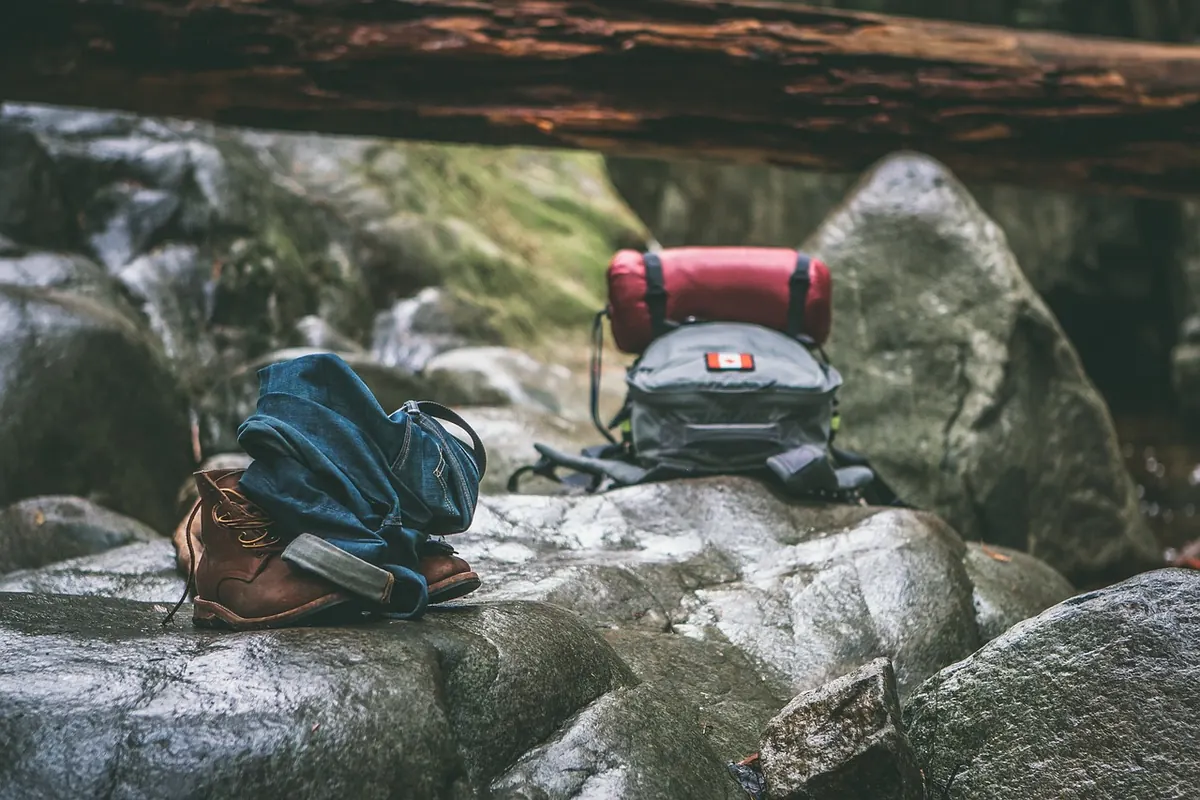
- Broken-in boots or trail shoes — whatever suits your terrain and your ankles. Wear them on travel days so they cannot go missing in a hold.
- Light camp shoes — sandals or trainers you could walk a kilometre in. Your feet need a break from boots each evening, and they are useful in hostel showers.
Safety, repair and power
- A head torch with spare batteries — or a rechargeable one plus its cable. A phone torch is no substitute when both hands are busy.
- A blister kit — blister plasters, tape and a small tin of petroleum jelly. Treat a hot spot the moment you feel it, not at camp.
- A personal first-aid pouch — plasters, antiseptic, painkillers, rehydration sachets, tweezers, and any prescription medicine in its original packaging with a copy of the prescription. Ask a pharmacist or travel clinic what suits your destination, and if you have a long-term condition, speak to your doctor before you go.
- A repair kit — a metre of duct tape wrapped around a pencil, a few zip ties, a needle and thread, and two metres of cord. Between them they fix rucksacks, sandals and tent poles.
- Water treatment — a filter or tablets, plus a backup method. Find out what the water is like where you are heading and treat it accordingly.
- An emergency bivvy bag and a whistle — small, light, and the sort of thing you carry in the hope of never needing it.
- A power bank and cables — 10,000 to 20,000 mAh, with the right plug adaptor. Charge everything the night before a travel day.
- Two dry bags — one for wet clothing, one for electronics, documents and anything that must stay bone dry.
Everyday items that quietly do the work
- A reusable water bottle — one litre, wide-mouthed so it is easy to fill and clean. A collapsible spare saves space on long days.
- A microfibre towel — dries fast and doubles as a pillow cover or a sun shade.
- Earplugs and an eye mask — hostels, night buses, early sun through a tent. Light, cheap and worth several times their weight.
- Sunscreen and lip balm with SPF — go higher factor than you think you need, and reapply at altitude and on the water.
- Toiletries in refillable bottles — solid shampoo and soap sidestep liquid limits entirely, and decanting only what you need for ten days saves real weight.
- Documents and money — passport, insurance details and emergency contacts, with a photo saved on your phone and a copy in a dry bag. Split cash and cards between two places.
- A 20–25 litre daypack — for day walks and as your hand luggage, with a rain cover if the forecast is uncertain.
Packing it so the system works
Pack in the order you will unpack. Anything you need on the first night — torch, wash kit, a warm layer, your charger — goes on top. Heavy items sit in the middle of the bag, close to your back, where they carry best. Line the whole rucksack with a large dry bag or a bin liner before anything else goes in; it costs nothing and saves everything.
Keep a single small pouch for the things you reach for constantly: head torch, water treatment, plasters, a snack, sun cream. Moving it between daypack and main bag takes seconds, and you stop rummaging through your clothing in the rain.
Before you leave, weigh the bag and walk around the block with it. Check your airline's hand-luggage dimensions and liquid rules, and confirm that your travel insurance covers what you actually plan to do — many standard policies exclude hiking above a certain altitude, climbing, or water sports unless you add them. Leave your route and expected return dates with someone at home, along with a copy of your insurance details.
Then take one thing out. There is always one.
Photo: Pexels / Pixabay